

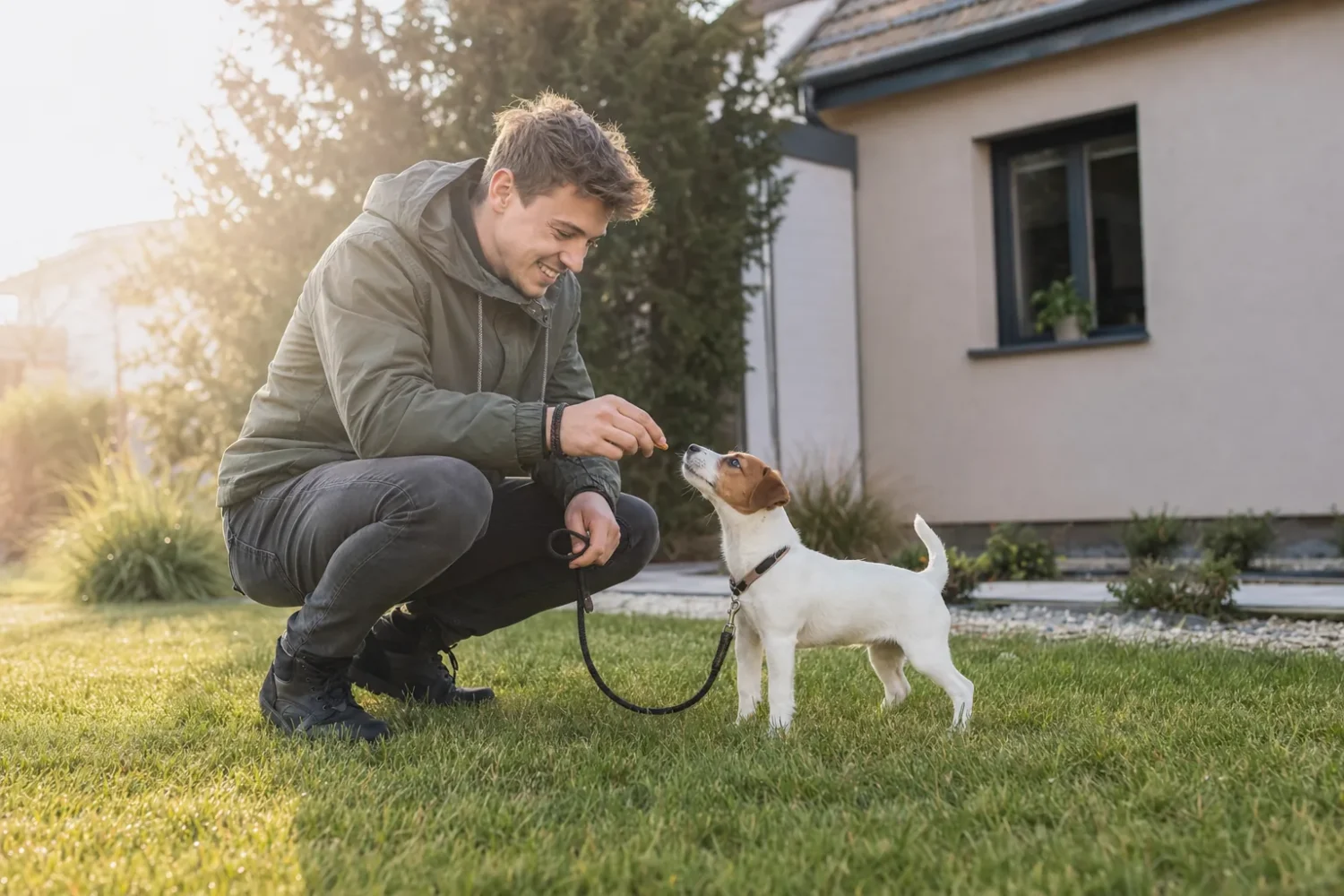
You can house-train a puppy by taking them out right after waking up, after eating, after playing and then roughly every hour, and as soon as they wee outside, praise and reward them immediately. Clean up accidents indoors without a word; punishment only slows down learning.
In a nutshell
- Take them out after sleep, after meals, after play, after excitement and before bedtime.
- According to the RSPCA, young puppies need to go out roughly every 45 minutes to an hour.
- Give the reward immediately after they wee outside, not once you're back home.
- Do not punish your puppy for accidents indoors; clean the spot thoroughly instead.
- Most puppies learn house-training within a few months.
When to take your puppy out?
At times when a puppy needs to go most often. The British RSPCA lists the following situations:
| Situation | When to go out |
|---|---|
| Waking up | immediately, even after a short nap during the day |
| Feeding | after every meal |
| Play and movement | after play or energetic activity |
| Excitement | after visitors arrive or when you come home |
| Sleeping | before settling down for the night |
| In between | roughly every 45 minutes to an hour, depending on the puppy's age |
According to Dogs Trust, a puppy signals that they need to go out by sniffing the ground, turning in circles, and squatting. Later, they might whine or go to the door. As soon as you notice these signs, take them outside.
How to house-train a puppy step by step?
- Choose one spot outside. Always take the puppy to the exact same spot; the scent will remind them why they are there.
- Be boring. Stand still and let the puppy sniff around. You can play afterwards.
- Add a cue word. The moment the puppy starts peeing, say your chosen cue, such as "wee-wee". Over time, they will associate it with relieving themselves.
- Reward immediately. As soon as they finish, praise them and give them a small reward, while still outside.
- Stay outside for a while. The RSPCA recommends having a short walk or a play afterwards, so the puppy doesn't learn that peeing means the fun outdoors is over.
- If nothing happens, head back inside, keep the puppy under supervision, and try again in 10–15 minutes.
- Repeat the same routine every day. Consistency is half the battle.
What to do when your puppy pees in the house?
Accidents will happen; they are part of the learning process. According to the RSPCA and Dogs Trust, it is essential not to punish the puppy for them, otherwise they may become fearful and start toileting in secret.
- If you catch them in the act, calmly take them outside and praise them if they finish outdoors.
- If you find an accident later, clean it up without a word. The puppy will not associate punishment with an old puddle.
- Clean the area thoroughly. The RSPCA recommends a solution of biological washing powder, followed by rinsing with water. Standard cleaning products may not remove the scent, and the puppy will return to the spot.
- Increase supervision. When you cannot watch your puppy, keep them in a playpen or a room with easy-to-clean flooring.
Puppy pads, or straight outside?
If possible, train your puppy directly outdoors from day one. Puppy pads can be handy at night, if you live on an upper floor, or when you are out for longer periods. Keep in mind, however, that your puppy will have to learn two habits, making the switch to the outdoors take longer.
When you want to phase out puppy pads, gradually move them towards the door, then outside, and finally remove them completely. Always reward every successful wee outdoors.
What about at night?
Young puppies usually cannot last the whole night without a toilet break. Take them out right before bedtime, and if they wake up during the night and seem restless, take them outside quietly, without lights or playtime. Then straight back to sleep. Night-time trips will gradually decrease as your puppy grows. It also helps to feed their last meal a sensible time before bed.
How long does it take to toilet train a puppy?
Usually a few months, and every puppy is different. Dogs Trust notes that becoming fully house-trained can naturally take several months, and according to the RSPCA, dogs do not have full bladder control until around 12 months. Occasional accidents in a young dog are therefore completely normal.
Consistency speeds up learning: meals at the same times, toilet breaks at the same moments, and rewards immediately outside. Regular feeding makes toilet trips predictable. To find the right number of meals by age, read our article on Feeding puppies from 8 weeks and how to handle the first days at home, see our article on 8-week-old puppy at home.
When to consult a vet?
Consult a vet if your puppy urinates unusually frequently and in tiny drops, seems to be in pain while weeing, or if house-training does not improve after a prolonged period despite consistent effort.
Treats and poo bags for walks
A tiny piece of something tasty is all you need for an outdoor reward. Along with fresh-meat tailor-made dog food, Rawbark also makes meat treats that are easy to break into small pieces, and kibble from their daily portion works brilliantly too. Handy rolls of poop bags. And when you build tailor-made dog food, the daily portion updates automatically as they grow, keeping both feeding and toilet routines consistent.
Frequently Asked Questions
How long does it take for a puppy to learn to wee outside?
Usually a few months, and every puppy is different. According to the RSPCA, dogs do not reach full bladder capacity until around 12 months of age, so occasional accidents with a young dog are completely normal. A consistent routine of regular feeding, taking them out after sleep, meals and play, and rewarding immediately outdoors will bring faster progress.
How do I stop my puppy from weeing indoors?
Take them out more often and at the right times: after waking up, after eating, after playing and roughly every hour. Reward them immediately after they wee outside. Indoors, keep them supervised or in a playpen, and clean up accidents without making a fuss. Clean the area with an enzymatic cleaner to remove any scent.
Should I punish my puppy when they wee indoors?
No. According to both the RSPCA and Dogs Trust, punishing your puppy only frightens them and can teach them to wee in secret where you cannot see them. If you catch them in the act, calmly take them outside and praise them if they finish there. Clean up old puddles without saying a word; the puppy will not connect them with punishment.
How do I wean my puppy off puppy pads?
Move the pad gradually towards the door, then place it outside where you want the puppy to wee, and eventually remove it altogether. In the meantime, take the puppy outside frequently and reward every successful wee outdoors immediately. Keep in mind that transitioning from a puppy pad takes longer than toilet training directly outdoors.
How often does a puppy need to go outside?
According to the RSPCA, a young puppy needs to go out roughly every 45 minutes to an hour during the day, plus after every wake-up, meal, play session and before bed. As they get older, the intervals get longer. At night, take them out quietly and without play when they wake up and seem restless.
How do I know my puppy needs to go outside?
According to Dogs Trust, a puppy will sniff the ground, turn in circles and squat. Later, they will learn to whine or go to the door. As soon as you notice these signs, take them straight outside to their spot and praise and reward them once they have wee'd. Over time, the cues become more subtle, but you will learn to read them faster.
Sources
- RSPCA: How to toilet train your puppy or dog: rspca.org.uk
- Dogs Trust: How to toilet or house train your dog: dogstrust.org.uk
This article provides general advice on raising a puppy. It does not replace veterinary advice.
What will you learn in this article?
- When to take your puppy outside
- Step-by-step guide
- What to do when accidents happen indoors
- Puppy pads, or straight outside
- How long it takes