

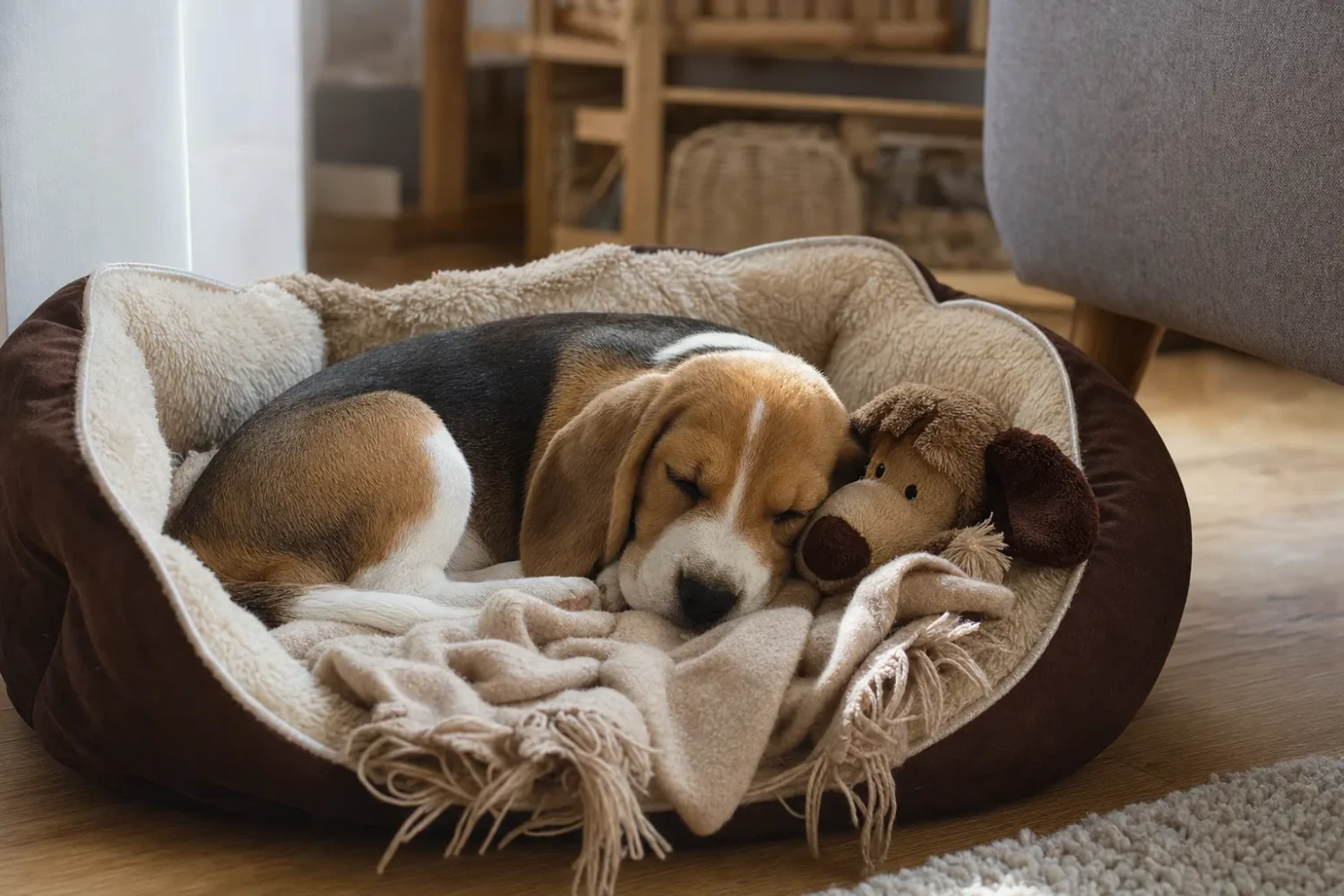
An eight-week-old puppy at home mainly needs peace and quiet, a regular routine, and plenty of sleep. For the first few days, feed them the same food they had at the breeder's, take them outside after waking up, eating, and playing, and introduce them to new people, places, and sounds gradually.
In a nutshell
- Before they arrive, prepare a quiet place to sleep, bowls, food from the breeder, and puppy-proof your home.
- Keep visitors and new experiences to a minimum during the first few days.
- The puppy will sleep for most of the day. Sleep is just as important for them as food and play.
- House-training is learned through repetition: outside after sleeping, eating, and play.
- Book an introductory check-up with your vet during the first few days.
What to prepare before the puppy arrives?
| Item | Why and what to consider |
|---|---|
| Bed or playpen in a quiet place | a puppy needs a spot where nobody disturbs them, ideally close to you |
| Two bowls | for water and for food, stable and easy to wash |
| Food from the breeder | for the first few days, so the diet doesn't change along with moving home |
| Collar or harness and a lightweight lead | adjust the size regularly, puppies grow fast |
| Chew toys | puppies explore the world with their mouth, so they have something to chew on instead of furniture |
| Puppy pads and cleaning spray | accidents happen, remove the odour thoroughly |
| Crate or a secure spot in the car | for the journey from the breeder as well as to the vet |
| Vet's contact details | choose one in advance, including the local emergency vet |
Check with the breeder what and how many times a day they fed the puppy, and take the puppy's paperwork. If possible, also take a piece of blanket that smells of mum and siblings.
How to puppy-proof your home?
- Hide cables, chargers and blind cords.
- Keep house plants, medication, cleaning products and sweets out of reach. Chocolate is harmful to dogs, find out more in the article What to do when a dog eats chocolate.
- Secure stairs and the balcony with a barrier.
- Put away shoes, socks and small toys; puppies will swallow all sorts of things.
How to handle the first day at home?
- Pick up the puppy in the morning or early afternoon. They will have the whole day to get their bearings.
- Upon arrival, go straight outside first, to the spot where you want them to do their business. When they pee, praise them gently.
- Let them explore one room. The whole flat at once is too much.
- No big welcomes. Postpone visits for a few days. Have children sit on the floor and let the puppy come over on their own.
- Feed the same way as the breeder. The same food, similar times, the same number of portions. How often to feed according to age can be found in the article Feeding puppies from 8 weeks.
- Let them sleep. When they fall asleep, do not wake them.
How to handle the first night?
The first night, the puppy sleeps without mum and siblings for the first time. What helps:
- a bed next to your bed, so your puppy can hear and smell you. You can move it later, gradually,
- a blanket carrying the scent of home from the breeder,
- a potty break right before bed,
- outside at night as needed, quietly, without playtime and without switching all the lights on,
- stay calm, no punishment. If they whimper, comfort them with your voice or a gentle hand.
Most puppies get used to it within a few nights. Night-time potty breaks will gradually become less frequent as the puppy grows.
What does a daily routine look like for an 8-week-old puppy?
A puppy alternates between short bursts of activity and long naps. A consistent routine helps with house-training, digestion and calmness. Adjust the times to suit you; what matters most is a repeating rhythm.
| Time | Item |
|---|---|
| 7:00 | wake up and straight outside |
| 7:15 | meal, then outside again |
| 7:30–8:00 | short playtime, a few minutes of training |
| 8:00–11:00 | sleep, outside after waking up |
| 11:00 | meal, outside, short playtime |
| 11:30–15:00 | sleep and short moments with you |
| 15:00 | meal, outside, a new spot to sniff around |
| 15:30–19:00 | sleep and short activities |
| 19:00 | last meal of the day, outside |
| until 22:00 | quiet evening, final potty break |
| at night | outside as needed |
Four meals a day is ideal for an 8-week-old puppy. If you plan to switch your puppy to tailor-made dog food later on, such as Rawbark kibble made with fresh meat, wait until after the first 2–3 days and do it gradually. You can find a day-by-day plan in the article How to transition to new kibble.
When should you take a puppy outside for house-training?
At 8 weeks, a puppy cannot hold it for very long yet. House-training is learned by being outside at the right moment and getting praised for it. Take them outside:
- straight after waking up, even after a short nap,
- after every meal,
- after play and excitement,
- when they start sniffing the floor and circling,
- before bedtime and at night whenever they wake up.
Clean up any accidents indoors without saying a word. Punishment makes no sense; the puppy will not link it with what they did. Praise outside works much better.
How much does a puppy sleep?
An eight-week-old puppy sleeps through most of the day. An overtired puppy gets nippy, restless and finds it harder to learn. Give them a quiet place where nobody will disturb them, and teach children that a sleeping puppy must not be woken up.
How to introduce your puppy to the world?
The first few weeks at home are essential for discovering the world. The puppy is currently learning what is normal and safe. Take it in small doses:
- new sounds (hoover, doorbell, cars) from a distance and quietly at first,
- new people calmly, one or two at a time,
- new surfaces and places briefly, when the puppy is well-rested,
- training just a few minutes: name, recall, "sit". End on a high note.
Check with your vet about when and where your puppy can meet other dogs. Biting hands and feet is normal at this age; we cover how to handle it in the article Our puppy bites.
What does the first week plan look like?
| Days | What to focus on |
|---|---|
| Days 1–2 | quiet time, one or two rooms, food from the breeder, routine toilet breaks, no visitors |
| Days 3–4 | slowly explore the whole flat, first short moments alone in the bed, optionally start the gradual transition to new food |
| Days 5–7 | introductory visit to the vet with paperwork from the breeder, first new people and sounds in small doses |
We explain how puppies transition from milk to solid food at the breeder's in our article Feeding puppies from 3 to 8 weeks.
When to consult a vet?
Call the vet if problems last longer than a day, if your puppy is lethargic, refuses food and water, or vomits repeatedly. Young puppies tolerate fasting and diarrhoea far worse than adult dogs, so do not delay. Softer stools in the first few days after moving are quite common, provided the puppy is otherwise lively, eating, and drinking.
Tailor-made kibble for puppies
Rawbark makes tailor-made dog food from fresh meat sourced from Czech farms, perfect for puppies too. Once your puppy is settled in, you can build kibble in the configurator. Based on their date of birth, we will tailor the kibble size, composition, and daily portions. The portion updates automatically as they grow, and the bag will feature your puppy's name and photo. Learn more on the Tailor-made dog food.
Frequently Asked Questions
How much does an 8-week-old puppy sleep?
Most of the day. At this age, puppies alternate short bursts of play and eating with long naps, and that is completely normal. An overtired puppy tends to bite and get restless. Give them a quiet spot, do not wake them, and take them outside every time they wake up to build good potty habits.
Where should a puppy sleep the first night?
Ideally in a bed or playpen next to your bed. Your puppy can hear and smell you, which makes settling down easier. A blanket carrying the breeder's scent and a potty break right before bedtime will help. You can move them to a different spot later, step by step, once they feel confident and settled at home.
How often should you take a puppy outside?
After every wake-up, after eating, after playing, before bedtime, and during the night when they wake up. Take them outside as soon as they start sniffing the floor and circling. Praise them for weeing outside and clean up accidents indoors calmly without a word—punishment does not work.
What to feed an 8-week-old puppy?
For the first few days, stick to the same food they were given by the breeder, in the same number of meals, usually four times a day. Switch to new food only after 2–3 days and gradually, so the move and dietary change do not happen all at once. You can find the right number of meals by age in the article Feeding puppies from 8 weeks.
Puppy whining at night. What to do?
The first nights are tough for a puppy; it is the first time sleeping without mum and littermates. Place their bed near your bed, add a blanket with the breeder's scent, and take them out right before bed. If they whine, soothe them with your voice or touch, do not shout. Most puppies settle within a few nights.
When can a puppy go out around other dogs?
Discuss this with your vet during your first visit, as it depends, among other things, on your puppy's vaccinations. Until then, your puppy can safely explore the world in other ways: sounds from the window, new surfaces at home and in the garden, calm visits from people. Always in small doses and when well-rested.
Sources
- American Kennel Club: Managing Weaning Diarrhea (puppies and digestion): akc.org
- WSAVA Global Nutrition Guidelines: wsava.org
This article contains general puppy care advice. It does not replace veterinary guidance.
What will you learn in this article?
- What to prepare before your puppy arrives
- How to handle the first day and night
- Sample daily routine for an 8-week-old puppy
- How to start house-training
- First week plan