

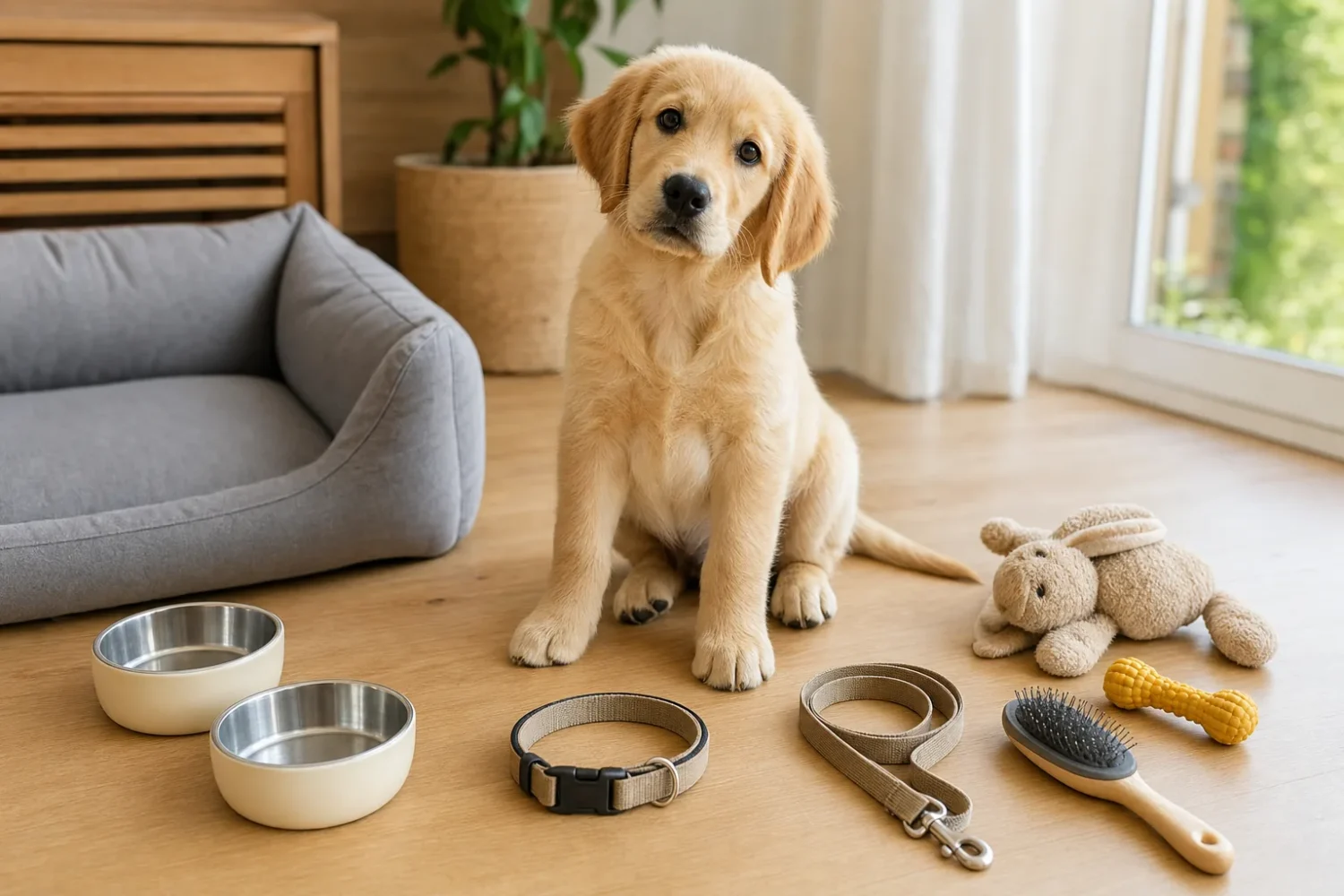
The basic equipment for a puppy includes two bowls for food and water, puppy food, a lightweight collar or harness with a lead and an ID tag, a bed, chew toys, and poop bags. Everything else, such as a crate, clothing, or breed-specific grooming brushes, can wait until you get to know your puppy.
In a nutshell
- Before arrival, the essentials are enough; buy the rest as your puppy needs it.
- A puppy grows quickly: check the collar almost daily, and buy a bed with room to grow.
- For the first few days, use the same food the puppy was used to from the breeder.
- Toys must be safe for the puppy and large enough so they cannot swallow them.
- There should be an ID tag with your contact details on the collar.
What to get for a puppy? Essentials checklist
You can print out the table and tick off items. "Straight away" means having it at home before the puppy arrives.
| Item | What it's for | When |
|---|---|---|
| Water bowl | fresh water must be available at all times | straight away |
| Food bowl | stable, non-slip, easy to clean | straight away |
| Food from the breeder | for the first few days, so the diet doesn't change along with moving home | straight away |
| Puppy food for the following weeks | complete food for growth, transition gradually | straight away or within a week |
| Lightweight collar or harness | for the ID tag and first walks | straight away |
| ID tag with phone number | in case the puppy gets lost | straight away |
| Lead | suitably light and long for the puppy's size | straight away |
| Bed or playpen | a quiet sleeping spot, with room to grow | straight away |
| Chew toys | for teething, to save furniture and hands | straight away |
| Poo bags | cleaning up after your dog in public | straight away |
| Puppy pads and cleaning spray | for indoor accidents during house-training | straight away |
| Crate or a secure spot in the car | journey home from the breeder and vet visits | straight away |
| Training treats | small rewards for training | first few weeks |
| Brush suited to coat type | getting used to grooming from the start | first few weeks |
| Indoor crate | only if you wish to use it as a safe haven | later |
| Coat / clothing | only for small and short-haired dogs in winter | later |
Which bowls and dog food to choose for a puppy?
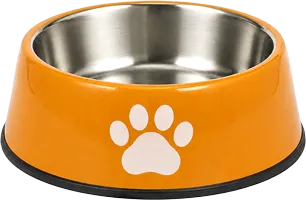
Get two separate bowls, one for water and one for food. The British Royal Kennel Club recommends non-slip bowls and reminds owners that puppies should always have fresh water available. Choose bowl size based on portion size, not the dog's future size. For trips, a collapsible bowl that clips to a rucksack or lead is handy.
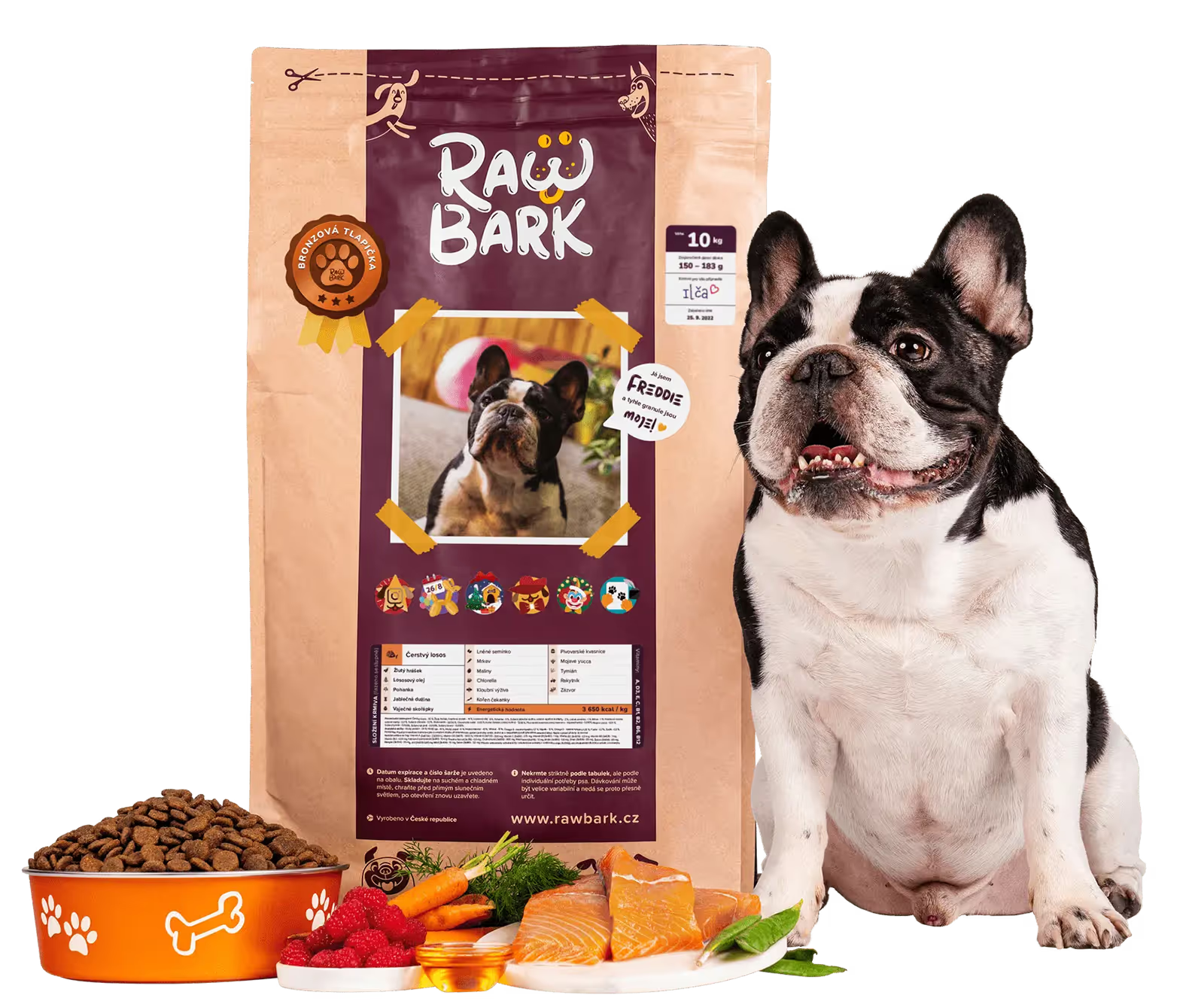
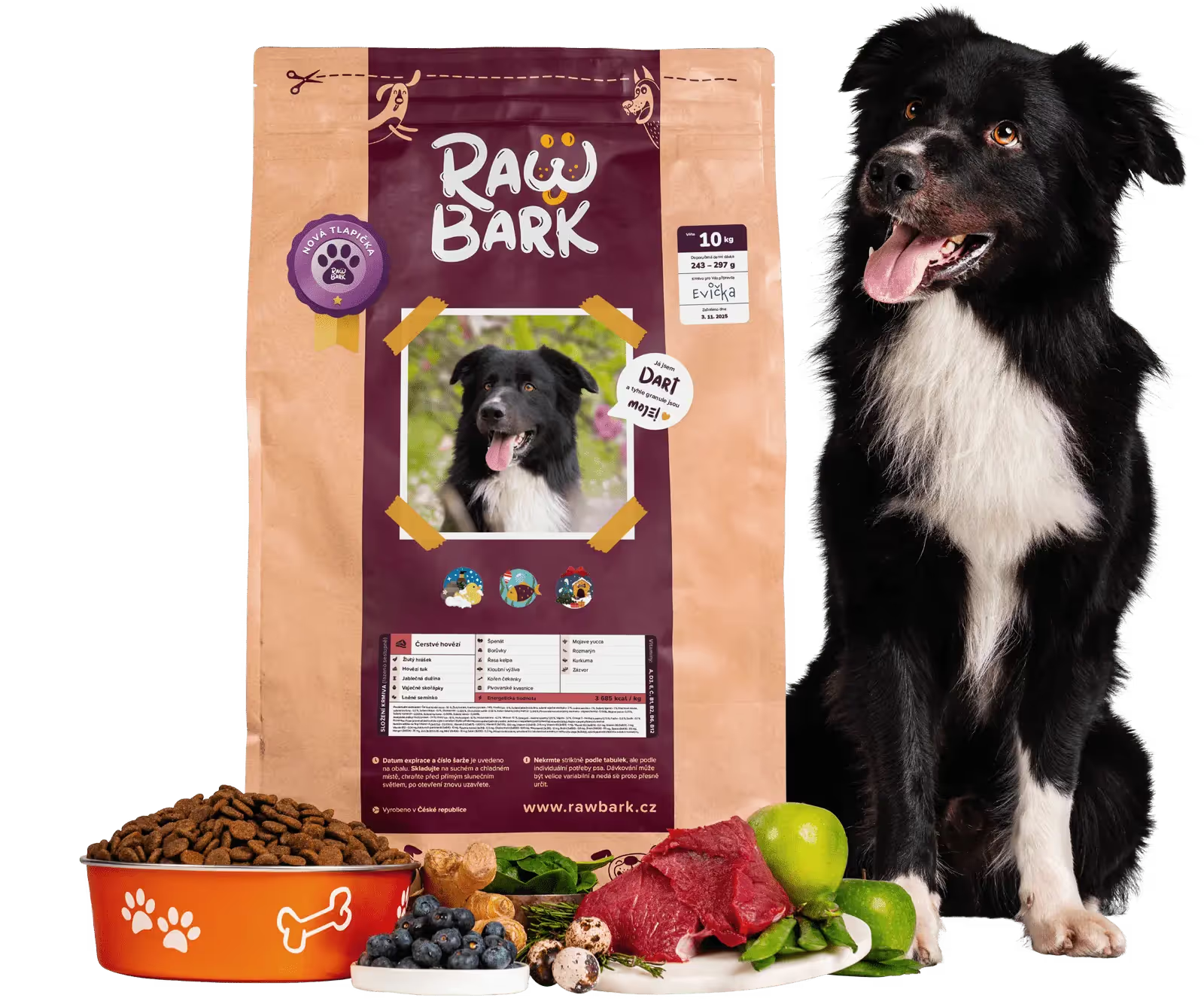
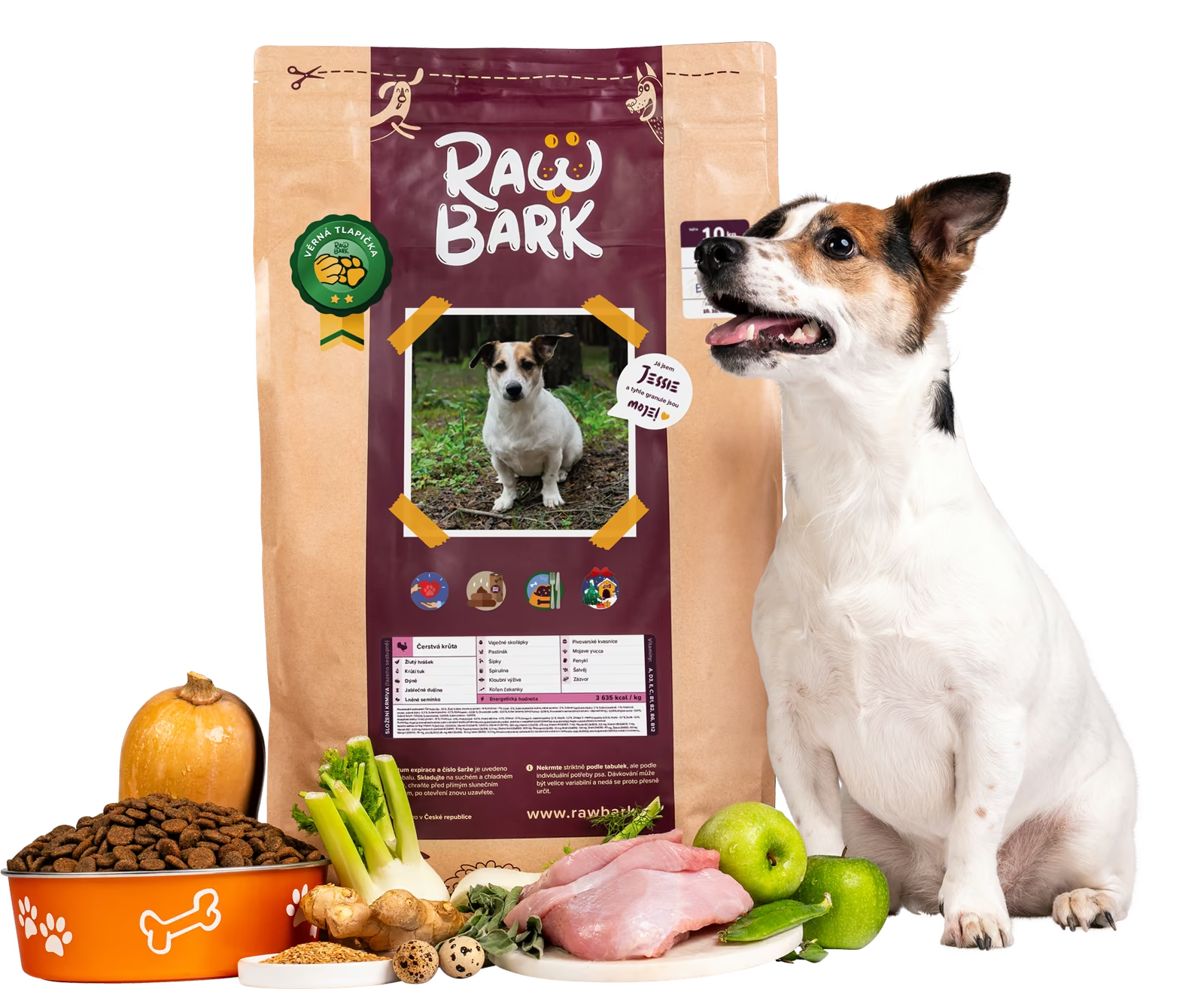
For the first few days, stick with the same food the puppy was receiving from the breeder. Only transition to new food after 2–3 days, and do so gradually. A growing puppy needs a complete puppy food or an all-life-stages food. We discuss how many times a day to feed depending on age in the article Feeding puppies from 8 weeks. Tailor-made dog food Rawbark jsou vhodné i pro štěňata: podle data narození přizpůsobíme velikost granulí, složení i dávkování.
Collar or harness? And what lead?
For a small puppy, a lightweight collar or harness will do. A collar carries the contact tag, while a harness relieves neck strain if the puppy pulls on the lead. Many owners use both: a collar with a tag, and a harness for walks.
- Collar size. According to the Royal Kennel Club, the collar must not slip over the head, and you should be able to fit two fingers underneath.
- Check. Puppies grow fast, so check the collar fit almost every day.
- ID tag. Put an ID tag with your phone number on the collar.
- Lead. Neither too long, too short, nor too heavy for the puppy's size. Attach it to the collar's ring, not the ID tag ring.
- Getting used to it. Put the collar on at home for short periods first, pairing it with treats.
The Rawbark collar (neck circumference from 34 cm) and adjustable Rawbark lead (124–200 cm) are suitable for larger puppies and adult dogs. For a very young puppy, start with a lighter collar and switch to ours once they grow.
What kind of bed, crate, or playpen?
Choose a bed with room for growth so your puppy can stretch out comfortably. The Royal Kennel Club recommends having two beds – one in use while the other is in the wash. Place it in a quiet spot, ideally close to you.
A playpen helps when you need to safely contain your puppy for a moment. An indoor crate is only for those who want to use it as a cosy haven. Never as a punishment and not for long hours.
What toys are suitable for a puppy?
Puppies explore the world with their mouths and need to chew, especially when teething. Give them a few different toys to chew on instead of shoes and furniture.
- Chew toys for puppies made of sturdy, but not hard material.
- Tug toy for playing together, so hands aren't seen as toys.
- Puzzle toy or snuffle mat for feeding part of the daily portion.
- Soft toy for cuddling and for their bed.
Toys must be large enough so the puppy cannot swallow them. The Royal Kennel Club warns against sticks and golf or squash balls. Throw away damaged toys. We explain how to handle biting at hands and feet in our article Puppy biting.
What do you need for hygiene and grooming?
- Poo bags. Cleaning up after your dog in public is a duty.
- Puppy pads and cleaning spray for indoor accidents. Remove the odour thoroughly, otherwise the puppy will return to the spot.
- Brush suited to coat type, so your puppy gets used to being brushed from the start.
- Towel for wiping paws after a walk.
What not to buy right away?
Large bags of food before you know if it suits the puppy. An expensive bed that the puppy will chew up. Dog clothes, unless you have a tiny short-haired dog. Hard chew bones not designed for puppies. And loads of toys all at once: it's better to get a few pieces and rotate them.
When to consult a vet?
Book an introductory vet appointment within the first few days. If the puppy swallows part of a toy or any other object, is lethargic, or stops eating and drinking, call the vet immediately.
Tailor-made dog food and gear from Rawbark
Rawbark vyrábí granule na míru pro psy z čerstvého masa z českých farem. Když štěněti build kibble in our configurator, we will adjust the kibble size, composition, and daily portion to their age; the portion updates automatically as they grow, and the kibble arrives in a bag featuring the puppy's name and photo. Additionally, in the Outdoor gear you'll find poo bags, a collapsible travel bowl, and a Rawbark collar and lead for older puppies.
Frequently Asked Questions
What are the essentials for a puppy?
Two bowls for water and food, puppy food (the same as from the breeder for the first few days), a lightweight collar or harness with an ID tag, a lead, a bed, chew toys, poo bags, and puppy pads with a cleaning spray. You will need a carrier or a secure spot in the car right away for the journey home.
What toys are suitable for a puppy?
Chew toys designed for puppies, a tug toy for playing together, a puzzle or snuffle mat, and a soft toy for the bed. Toys must be large enough so the puppy cannot swallow them. Never give them sticks or small balls, and throw away damaged toys. Rotate several toys.
Collar or harness for a puppy?
Both have their place. A collar holds the tag with your contact details, while a harness takes the strain off the neck when the puppy pulls on the lead. The collar must not slip over the head, and two fingers should fit under it. Puppies grow fast, so check the fit almost every day.
How much does puppy equipment cost?
It depends on what you already have at home and the quality you choose. Expect a one-off purchase of the essentials and regular expenses for food, treats, and vet visits. Don't spend on everything all at once: puppies often chew up expensive beds, quickly outgrow collars, and it's best to buy toys based on what they actually enjoy.
Does a puppy need a crate?
Not necessarily. A crate or playpen comes in handy when you want to create a cosy, safe space for the puppy or contain them for a short while. It must be big enough for the dog to stand up and stretch out. Never use it as a punishment and do not leave the puppy in it for hours on end.
What lead to buy for a puppy?
Lightweight and of an appropriate length for the puppy's size so its weight doesn't pull on the neck. A standard lead, not a retractable one, is ideal for learning to walk. Attach it to the ring on the collar or harness, not to the ID tag ring. As the puppy grows, you can switch to a stronger one.
Sources
- Royal Kennel Club: Essential equipment for your puppy or dog: royalkennelclub.com
- Dogs Trust: Puppy checklist: dogstrust.org.uk
- Rawbark products: rawbark.cz/sortiment
This article contains general advice. It does not replace veterinary advice.
What will you learn in this article?
- Puppy checklist by priority
- How to choose bowls and food
- Collar or harness, and what lead
- What toys are suitable for a puppy
- What not to buy right away