

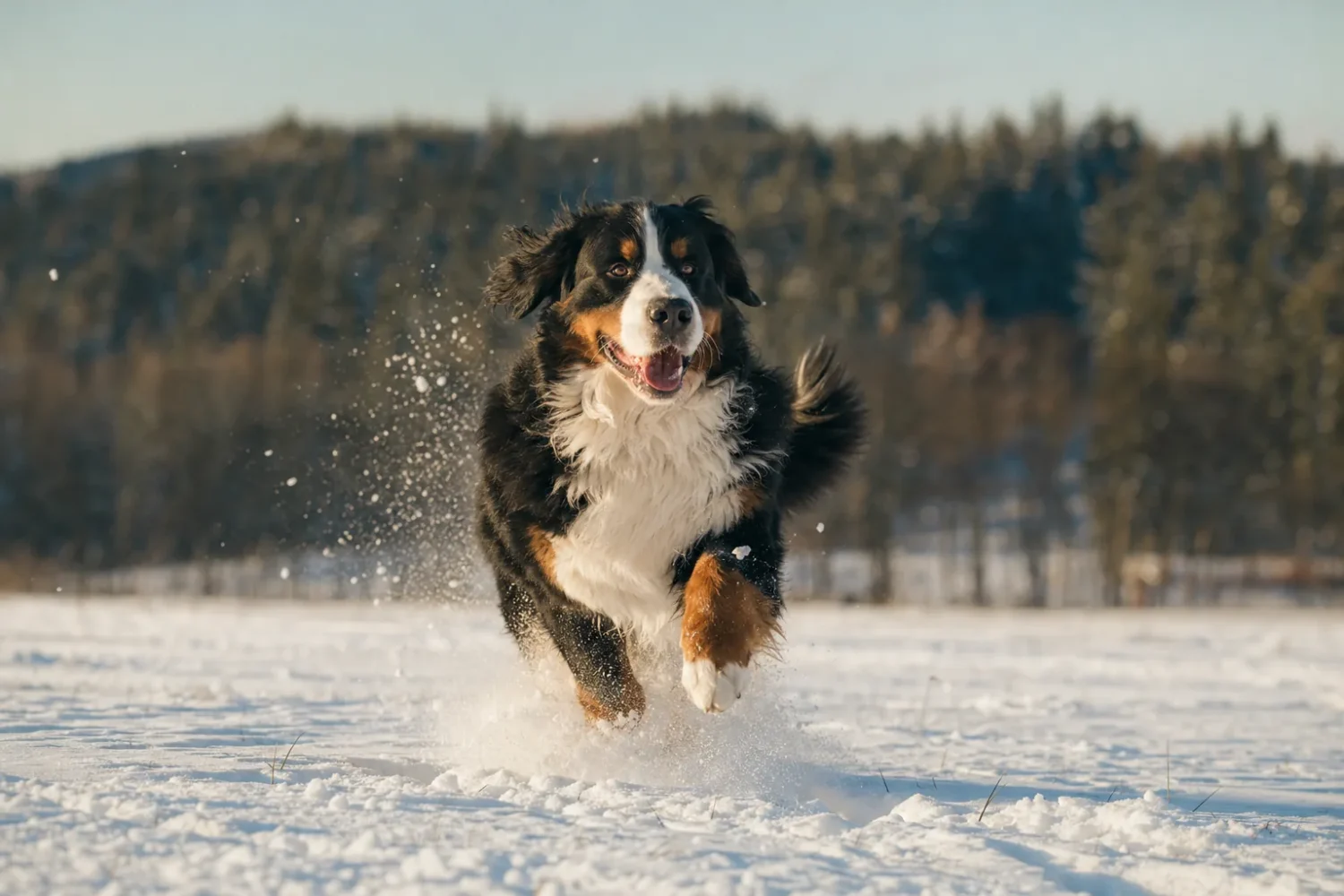
In winter, small, lean, and short-haired dogs, puppies, and senior dogs catch a chill the quickest, so shorten their walks in freezing weather and consider a coat. Wash and dry your dog's paws after every walk to remove salt and grit, and adjust their food portion according to how much they actually move in winter.
In a nutshell
- Small, lean, short-haired, young, or senior dogs are more sensitive to the cold.
- Salt and grit irritate paws and dogs might lick them, so wash and dry their paws after every walk.
- Use a reflective or light-up collar or vest in the dark.
- Keep your dog away from frozen ponds and rivers.
- When a dog moves less in winter, they may need a smaller food portion.
Which dogs feel the cold in winter?
According to the Royal Kennel Club, small, lean, very young and senior dogs, along with short-haired breeds, are more sensitive to the cold. Nordic breeds with a thick undercoat handle freezing temperatures much better.
| Dog type | What to watch out for |
|---|---|
| Small and short-legged dogs | belly is close to the snow, get cold quicker; shorter walks, coats if needed |
| Short-haired and lean dogs | little insulation, shiver quickly in freezing weather; a coat is useful |
| Puppies | short walks, dry off and warm up after returning |
| Senior dogs | shorter and more frequent walks, watch out for black ice |
| Long-haired dogs | snow and ice stick between the pads, trim the hair between the toes |
| Dogs with a thick undercoat | handle the cold well, but keep an eye on their paws and salt anyway |
You can tell your dog is cold by shivering, lifted paws, a hunched posture, or wanting to turn back home. That is when you should end the walk.
How long should you walk a dog in winter?
Dogs need exercise even in winter, just organise it differently. In freezing weather, head out more often for shorter periods rather than once for a long time, and adjust the duration to your dog: shivering or lifting their paws are clear signs. The Royal Kennel Club points out that shorter days and less exercise in winter make it easier to gain weight, so complement walks with indoor games.
- Be seen in the dark. A reflective or light-up collar or vest for the dog, a head torch for you.
- On a lead near water. Keep your dog away from frozen ponds and rivers. According to the RSPCA, thin ice can break under a dog.
- Watch out for antifreeze. Leaks from cars in car parks smell sweet and are toxic to dogs. Do not let them lick anything.
- Dry them off after returning. Use a towel on their coat, belly and paws so your dog does not get chilled.
How to protect dog paws in winter?
Paws suffer in winter from grit, salt, ice and dry indoor air. A simple routine helps:
- Before the walk apply paw balm to the pads. It creates a protective barrier on them.
- During the walk avoid heavily gritted pavements where possible and walk on snow or grass.
- After the walk rinse the paws with lukewarm water and dry them thoroughly, including between the toes. The Royal Kennel Club reminds us that salt can irritate the skin, and the RSPCA recommends wiping down the tummy too.
- Hair between the pads on long-haired dogs should be trimmed to prevent ice balls from forming.
- At home you can treat dry pads with balm again.
Dog boots are another option, especially in the city with heavily gritted pavements. Your dog needs to get used to them gradually.
Does a dog need a coat in winter?
Not every dog. Coats are useful for dogs prone to getting cold quickly: small, lean and short-haired breeds, puppies, and older dogs. Dogs with thick double coats generally don't need one.
According to the RSPCA, a coat should fit well: snug without restricting movement or hindering toilet breaks. Introduce your dog to wearing clothes indoors for short periods using treats, and remove the coat after walks if it gets wet.
Can dogs stay outside in winter?
Dogs accustomed to outdoor living cope well with winter if given the right conditions. An outdoor dog requires a dry, insulated kennel protected from the wind, dry bedding, unfrozen drinking water, along with daily exercise and human companionship. In sub-zero temperatures, check their water and general condition regularly. Animal welfare legislation requires keepers to provide living conditions suited to an animal's needs.
Small, short-haired and senior dogs, along with puppies, belong indoors in winter.
Should I feed my dog more or less in winter?
It all depends on how active your dog is in winter. If they spend plenty of time outdoors or do winter sports, they may need more calories. However, most family dogs are less active in cold weather and therefore require slightly less food. The Royal Kennel Club advises reducing food portions if a dog begins to gain weight in winter.
- Weigh your dog every 2–4 weeks and keep an eye on their ribs and waistline.
- Adjust portion sizes in small steps.
- Include training treats used on walks in the daily food allowance.
- Change water more often, especially outdoors where it can freeze quickly.
Rawbark tailor-made dog food is tailored to your dog's age, weight and activity level, so the daily portion precisely matches how much they actually move.
When to consult a vet?
Consult a vet if your dog is limping or constantly licking their paws, if their pads are cracked and bleeding, if they cannot warm up long after a walk, or if they have ingested antifreeze or grit and are not acting as usual.
Paw balm and feeding tailored to activity levels
For winter walks along gritted pavements, try Rawbark nose and paw balm: with shea butter, beeswax and plant oils, it forms a protective barrier on paw pads. Apply it before heading out or after returning. And since activity levels shift in winter, matching your dog's food to their routine helps: Rawbark makes tailor-made dog food using fresh meat from Czech farms, and when you build it in our configurator, you will get a daily portion tailored to their age, weight and activity level. If your dog's routine changes, simply update their details in your My pack account or fill out the questionnaire again.
Frequently Asked Questions
At what temperature do dogs get cold?
There is no single temperature threshold for all dogs. It depends on size, coat, age and acclimatisation. Small, lean, short-haired dogs, puppies and senior dogs may start shivering around freezing, whereas dogs with thick double coats can easily handle frost. Watch for shivering, lifted paws and a hunched posture.
What should I put on my dog's paws in winter?
Apply a paw balm to the pads before going out to form a protective layer against salt and ice. After the walk, rinse the paws with lukewarm water and dry thoroughly, including between the toes. You can moisturise dry pads again indoors. Avoid using fragranced human creams on dogs.
How long should you walk a dog in winter?
Opt for more frequent, shorter walks. Tailor the duration to your dog: if they shiver, lift their paws or want to turn back, head home. Small and short-haired dogs, puppies and senior dogs manage less in the cold. Make up for missing outdoor exercise with indoor games and scent work.
Does a dog need a coat in winter?
Small, lean and short-haired dogs, puppies and senior dogs do; clothing helps them retain body heat. Dogs with thick double coats generally do not. A coat should fit snugly without restricting movement or getting in the way during toilet breaks. Get your dog used to wearing clothes at home with treats.
Can a dog stay outside in a kennel during winter?
A dog used to outdoor life can, provided they have a dry, well-insulated kennel shielded from the wind, dry bedding, unfrozen water, daily exercise and human contact. Small, short-haired or senior dogs and puppies belong indoors in winter. Monitor your dog's condition regularly during freezing temperatures.
Is pavement grit dangerous for dogs?
Salt and grit irritate paw pads, prompting dogs to lick them. Always rinse and dry the paws after every walk, and protect them with balm beforehand. Where possible, stick to snow or grass. If your dog has licked road grit and isn't behaving normally, contact your vet.
Sources
- Royal Kennel Club: Keep your dog safe during winter: royalkennelclub.com
- RSPCA: Winter and cold weather care for dogs: rspca.org.uk
- ASPCA: Cold Weather Safety Tips: aspca.org
- Act No. 246/1992 Coll., on the protection of animals against cruelty: zakonyprolidi.cz
This article contains general advice on dog care. It does not replace the advice of a vet.
What will you learn in this article?
- Which dogs feel the cold first in winter
- How to adapt walks in freezing weather
- How to protect paws from salt and ice
- Which dogs benefit from a coat
- Whether to feed more or less in winter