

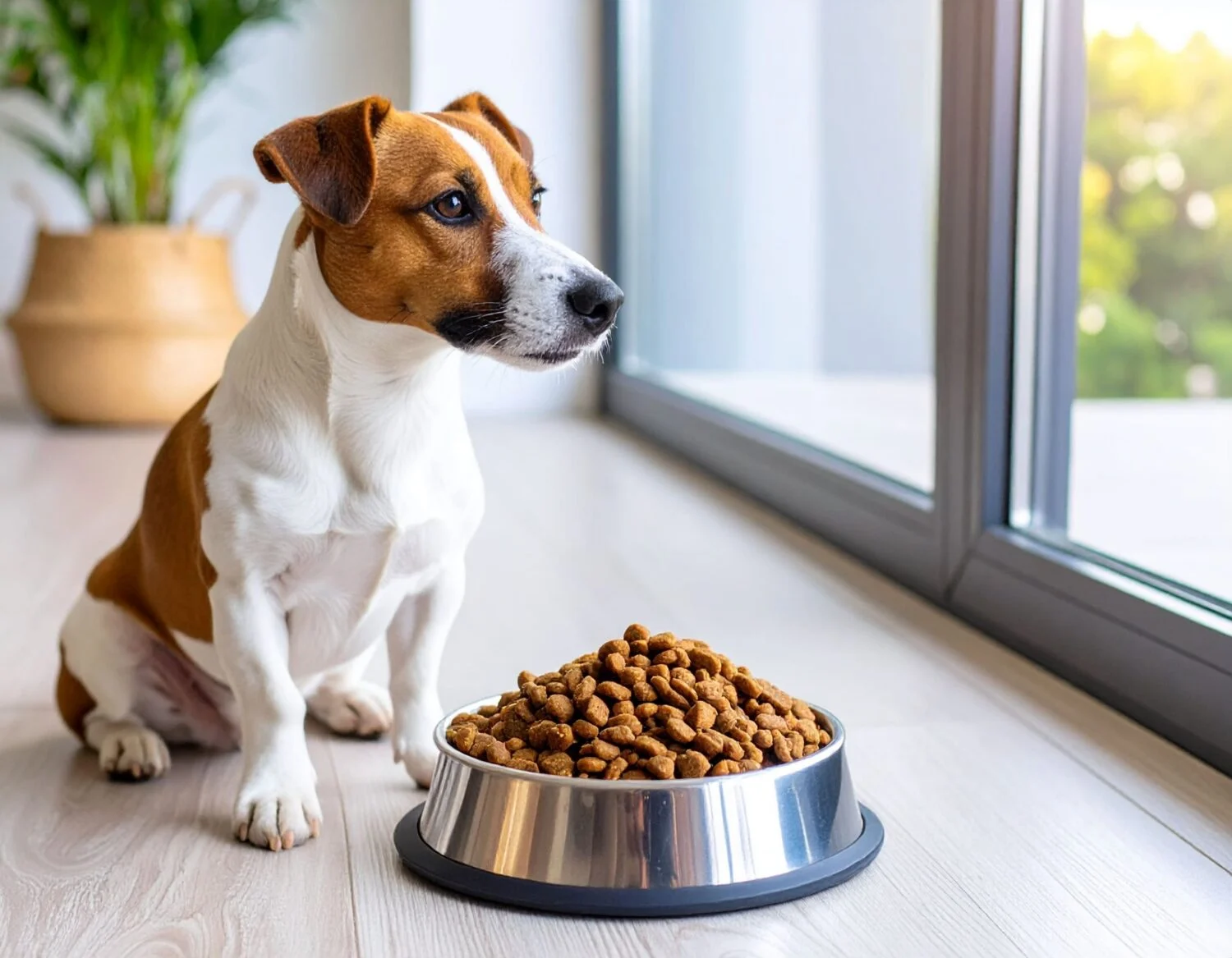
What to do when your dog refuses to eat?
What to do when your dog refuses to eat?
Every dog owner has at some point faced a situation where their four-legged buddy suddenly lost their appetite – whether it's ignoring a full bowl or showing no interest in a favourite treat. Refusing food can be a sign of various problems – it may be a simple whim, or a signal that something isn't right.
In this article, we'll look at the most common reasons why a dog refuses to eat and how to tell when it's something more serious, and we'll offer practical tips on how to help your pet get their appetite back.
- Changes in the environment and stress factors
If your dog suddenly loses interest in food, it may be the result of stressful changes around them. Whether you've moved house, changed the feeding schedule or a new member has joined the household – any of these factors can cause a dog to stop eating. Dogs love stability, and any disruption to their usual routine can trigger anxiety, which often shows up as a loss of appetite.
How to help?
- Keep things regular: If at all possible, try to stick to the routine your dog is used to. Feeding, walks and rest should happen at roughly the same time every day.
- A fixed, quiet place to eat: Give your dog a quiet, unchanging feeding spot where they won't be disturbed by other family members or outside influences. Children running around, other dogs or loud noises can completely block their appetite.
- Maintain a sense of security: After a big change such as a house move, a dog needs time to settle into the new environment. Familiar things from the previous home can help – a bed, a blanket or a favourite toy with a familiar scent that gives them a sense of security.

2. Health problems
Loss of appetite can be a symptom of a whole range of health problems and should not be underestimated. If your dog refuses food for more than 24–48 hours, or other symptoms appear (vomiting, diarrhoea, lethargy, weight loss, changes in behaviour), you must contact a vet.
The most common health causes of loss of appetite include:
- Problems in the mouth – gum inflammation, tartar or other painful conditions can mean that the dog is hungry but refuses food because of the pain.
- Digestive problems – an upset stomach, an intestinal infection or a foreign body in the digestive tract often lead to vomiting and refusing food.
- Parasitic infections – an overgrowth of intestinal parasites can reduce appetite, especially in puppies.
- Chronic pain – e.g. musculoskeletal conditions can affect food intake over the long term and lead to weight loss.
- More serious diagnoses – kidney, liver or pancreatic disease, or cancer, can show up as loss of appetite even in the early stages.
- Loss of appetite after anaesthesia or medication – some medicines (e.g. antibiotics, anti-inflammatories, heart medication) can temporarily suppress appetite.

When to pay attention and see a vet:
- If your dog suddenly stops eating for no obvious reason. If there is significant weight loss or loss of muscle mass.
- If, besides loss of appetite, other warning signs appear, such as vomiting, diarrhoea, apathy, weight loss or signs of pain. If your dog drools more than usual or is foaming at the mouth.
- If it's a puppy, a senior or an animal with a chronic illness.
- If your dog repeatedly vomits its food or eats nothing at all for more than 48 hours.
Health causes require a professional examination and timely diagnosis. Trying to solve the problem at home without consulting a vet can mean a serious illness gets overlooked.
3. Fussiness and too many treats
If your dog is losing interest in their usual food, the cause may be either too many treats during the day or a gradually learned habit of refusing food in favour of something “better”. Dogs quickly learn that if they leave the bowl full, they'll get another – tastier – alternative. Frequently changing food, feeding outside the routine or giving in when they turn their nose up then disrupt their eating rhythm and weaken their appetite.

In most cases it isn't a whim but subtly learned behaviour. It only takes a few situations where the dog refuses food, the owner gets unsure and offers something else. The dog soon learns that refusing earns them a different food. Such a pattern then becomes fixed and can be hard to change later.
How to deal with it:
- Stick to a regular routine: offer food at the same time every day and leave the bowl down for 15–20 minutes. Even if your dog doesn't eat, take it away and offer it again only at the next meal.
- Treats in moderation: treats shouldn't make up a significant part of the daily intake. Give them purposefully – as a reward or during training.
- Don't be overly flexible: Not every refused meal is a reason to change brands.
- Consider a health cause: If your dog repeatedly refuses food despite a clear routine and these measures, it's time to consult a vet
A dog that is healthy, isn't stressed and has a regular routine usually has no problem with food. But if a dog discovers that every time they turn their nose up it's a chance to get something better, this pattern can become hard to break. Even though it may take some time, it can be managed with patience and consistency.
PRACTICAL TIPS TO FINISH – HOW TO ENCOURAGE YOUR DOG TO EAT
If you've ruled out health causes, your dog hasn't been through a stressful event and you keep a regular routine, you can try some of these ways to boost their appetite:
- Add some exercise – a walk or play before feeding naturally helps boost appetite. However, only serve the food at least 30 minutes after the activity, so the body has time to calm down.
- Make the food more appealing the natural way – enrich the food with, for example, salmon oil, which enhances the aroma and makes it more tempting for your dog. Besides the taste, it also has health benefits.
- Add a little warm broth – an unseasoned, warm broth helps bring out the aroma of the kibble and so makes it more appealing.
- Feed regularly – offer food at the same time every day. Keeping to a routine creates a predictable rhythm, which also helps appetite.
- Limit treats – avoid giving goodies frequently outside main meals. Too many treats during the day reduce appetite and can lead to your dog refusing their food because they're not hungry enough.
- Serve food in peace – a dog needs an undisturbed environment while eating. Give them a fixed spot away from bustle, noise and distractions.
- Food quality matters – artificial flavourings and flavour enhancers can disrupt a dog's natural tastes over the long term. Good-quality food with a simple, clean composition supports healthy eating habits and reduces the risk of fussiness.

What will you learn in this article?
- What can cause loss of appetite in dogs – from stress to health problems
- When to see a vet and which warning signs to watch for
- How to tell the difference between fussiness and a more serious problem
- Practical tips to boost appetite in a natural and safe way