

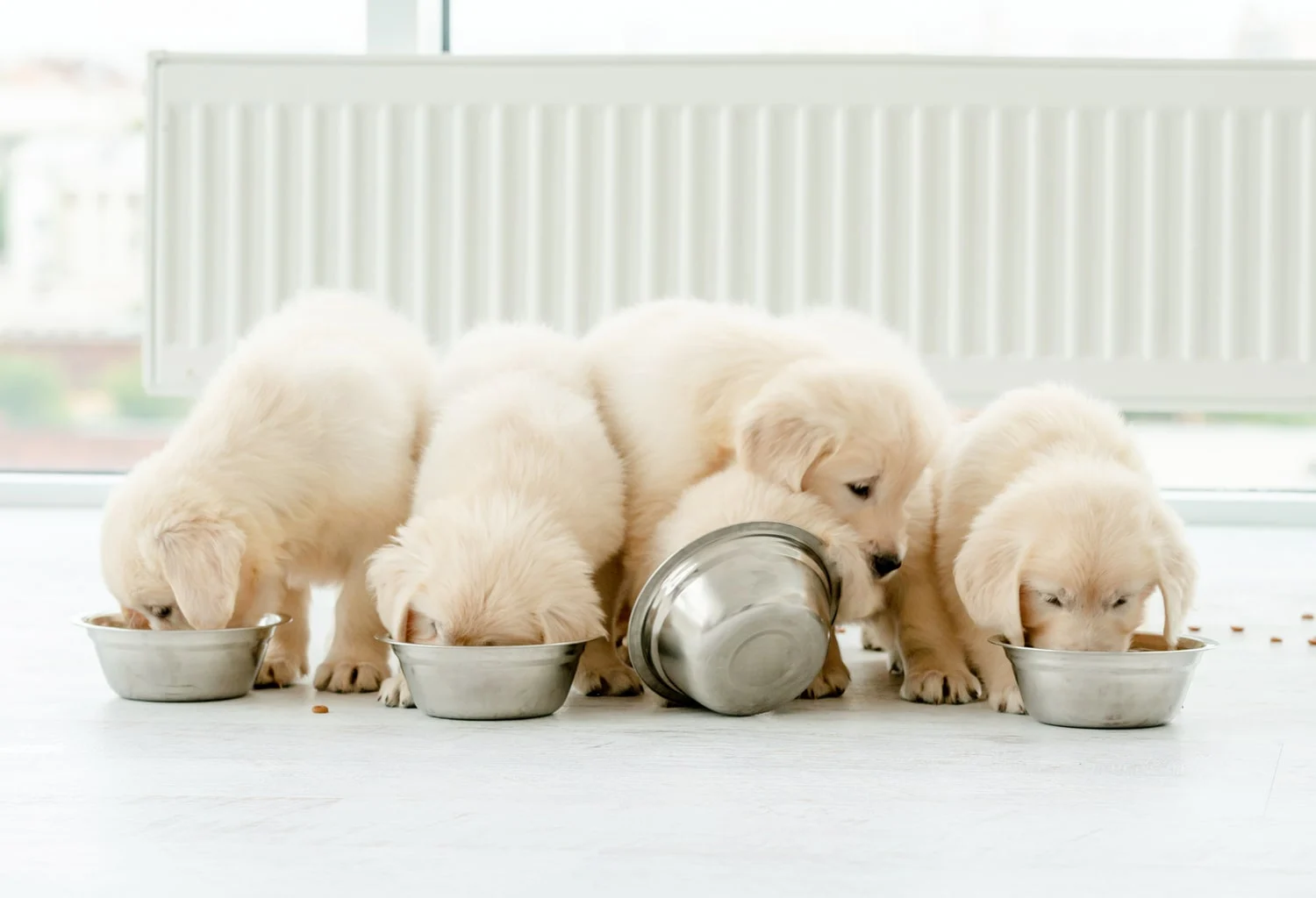
The right way of feeding puppies is always a big question. The period when a puppy grows and develops is very important, so when feeding puppies it's a good idea to follow certain rules. The foundation is choosing high-quality, nutritionally balanced food that meets all the needs of a growing body.
1. A puppy needs to be fed differently from an adult dog
Puppies have a very sensitive digestive tract and a small stomach, so you need to split the daily amount of food into smaller portions and feed several times a day. As for the amount, follow the recommended feeding guidelines on the food. Bear in mind, though, that these are only recommendations and need to be adjusted to your individual dog.
Puppy feeding table (how many times a day to feed a puppy)
| Puppy up to 2 months: | 5 – 6 times a day |
| From 2 to 4 months: | 4 – 5 times a day |
| From 4 to 6 months: | 3 times a day |
| From 6 to 12 months: | 2 times a day |
| From 12 months: | 1 – 2 times a day |

2. Don't feed your puppy right after it wakes up
As soon as your puppy wakes up, take them outside straight away. Only after the toilet break and some play can you give them their food bowl (after a short while).
3. Stick to a regular feeding routine
With a puppy, it's very important to build good eating habits and so prevent bad ones such as gulping and overeating. Keep to mealtimes as precisely as possible – dogs love routine and any change can stress them unnecessarily. Choose one spot where nothing will disturb them while eating. Don't leave puppy kibble in the bowl available all day. Teach your dog from an early age that food is only available for a certain time. This way you preventthem from developing bad habits such as leaving food or being picky, since they would always be sure to find something in the bowl. At the same time, you'll keep track of how much they ate and when, which is key to keeping the rest routine. Sometimes a puppy leaves a few pieces of kibble in the bowl at every meal – don't panic. They ate the amount they needed at that moment. Definitely don't save the rest for later. Always prepare fresh food and the right portion.
4. After each meal, let your puppy rest and digest in peace
Keep your puppy to a rest routine after every meal. This reduces the risk of gastric torsion and helps digestion. Experts recommend at least 30 minutes, but ideally give your dog up to 2 hours of rest after eating.

5. Monitor weight development and weight gain
During growth, it's very important to regularly monitor your puppy's weight. Always check the food portion carefully so that the puppy doesn't gain weight too quickly. Being overweight could harm their skeleton later on.
6. Pay attention to any long-term deviation from normal
For example excessive drinking, unusual stool consistency and colour, vomiting, weight loss … Discuss any deviation from normal with your vet.
How to gently switch your puppy to a new brand of kibble?
When you collect your puppy from the breeder, find out what and how the puppy has been fed. If the breeder used puppy kibble you're not happy with and you want to choose the best puppy kibble on the market yourself and decide to change brands, it's important that the switch to the new food isn't rushed. Their diet shouldn't get a shock right after arriving in their new home.
For the first 2 to 3 days after arriving home, give your puppy only the kibble from the breeder. Then, in every portion, start replacing some of the original kibble with the new one. Gradually increase the proportion of new kibble during the transition until the old kibble has been completely replaced. Mix the kibble step by step like this for roughly 5–10 days. That should be enough time for a puppy to get used to the new diet. At first, your puppy may get diarrhoea from the new food. It should settle once they get used to the new food and shouldn't last longer than a week. If the diarrhoea persists after 7 days, it's better to stop the new food and consult a vet.
What will you learn in this article?
- Basic rules for feeding puppies from 8 weeks
- Puppy feeding table
- The importance of a rest routine
- What to monitor and when to pay attention
- How to gently switch to a new brand of kibble