


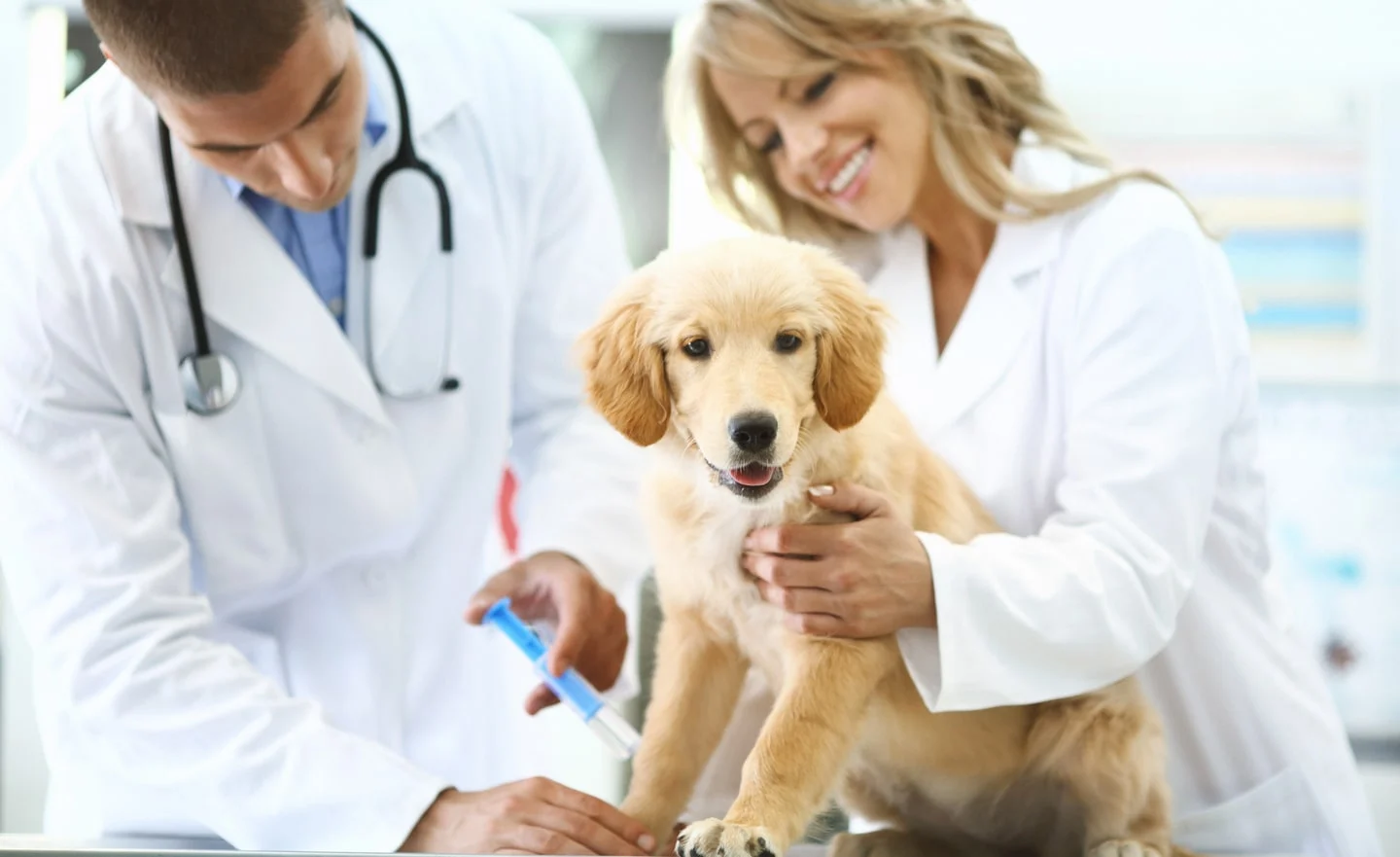
Vaccination is an essential part of preventive care for pets. Vaccination prevents serious diseases from developing and spreading and effectively protects the animal against infection. During vaccination, a small amount of the disease agent is introduced into the body, which on its own is unable to cause infection. The aim is to kick-start the immune system so that, if infected, thanks to the vaccination it can destroy the disease right at the start, so that it doesn't even break out.
Newborn puppies usually receive the largest amount of antibodies by taking in colostrum from their mother during the first 24 hours after birth. If a puppy is in contact with its mother after birth, as is usual, it receives about 95 % of its antibodies through suckling. Sometimes, for various reasons, this doesn't happen, and then the mother and puppies must be carefully protected from possible infection, because if a puppy doesn't receive the first secretion produced by the mother's mammary glands (colostrum), it isn't protected by her antibodies. A puppy that has been suckled normally by its mother is protected by maternal antibodies in the first weeks of life. High levels of these antibodies remain in the puppy's blood until roughly 6 weeks of age and then gradually decline.

Since without a test of the antibody levels in the blood we can never be sure how the puppy is doing, the FIRST vaccination is given before the puppy leaves its mother for its new home, e.g. one to two weeks before it is handed over to its new owner.
The first vaccination can be given at the earliest after 6 weeks of age. The first dose may still be neutralised by remaining maternal antibodies, which is why the SECOND dose of the vaccine is absolutely ESSENTIAL; it is given two to three weeks after the first dose. If the puppy is not revaccinated within this interval, the whole vaccination schedule has to be started again. The third vaccination is given 3–4 weeks after the second dose. This is followed by regular annual boosters.
A chapter of its own is vaccination against rabies, which is required by law. The vaccine can be given from 3 months of age at the earliest. It is usually given together with the last vaccination against all the infections. By law, the owner must have their dog vaccinated against rabies from 6 months of age. So it is possible to vaccinate against rabies later and thereby reduce the strain on the puppy's immune system. A booster against rabies is always due when the period of effectiveness of the vaccine used is coming to an end. Length of this period depends on the brand of vaccineused. Accordingly, dogs get a rabies booster either every year or every two to three years.

What might a vaccination schedule look like in practice? It's important to stressthat a general vaccination schedule is always difficult to state. Each puppy will have its own individual vaccination plan, and the subsequent boosters will depend on it. Your vet will tell you the specific vaccination plan, along with the dates of further boosters, which depend on the brand of vaccine used.
Basic vaccination schedule (this is only an example; every veterinary clinic has its own vaccination procedures)
1st vaccination
- starts at the earliest after 6 weeks of age
- vaccination against 2 diseases: distemper and parvovirus
2nd vaccination
- at 9 weeks of age
- vaccination against 5 diseases: distemper, parvovirus, infectious hepatitis, parainfluenza, leptospirosis
3rd vaccination
- at 12 weeks of age
- 5 diseases: distemper, parvovirus, infectious hepatitis, parainfluenza, leptospirosis
- rabies can also be added or given separately another 3-4 weeks later
This is followed by regular annual boosters.
An essential rule is to vaccinate only healthy animals. If the animal is ill, vaccination should be postponed. On the day after vaccination it's key not to put too much strain on the animal and to keep it resting. Don't let the dog get cold anywhere, and discuss giving any medication, including deworming tablets, with your vet. It's usually advisable to deworm dogs no later than a week before and no earlier than a week after vaccination.
The vaccination itself is usually well tolerated. Side effects such as tiredness, loss of appetite and a temporary rise in temperature are rare and pass quickly. In exceptional cases, itching and swelling at the injection site or swelling of the head may occur. Tell your vet about any such side effects – they will switch to a different brand of vaccine at the next vaccination.

What will you learn in this article?
- Why vaccination matters
- When to start the first vaccination of puppies
- How and when to vaccinate correctly
- Rules to follow after vaccination and side effects of vaccination